
Why the BRRRR Strategy Is Taking Over in 2026 (and What Smart Investors Are Doing Differently)
A practical look at how investors are adapting to slower, smarter markets
FOR INVESTORSFOR BUYERSSTRATEGY
Gergen Robinson
1/26/20263 min read
If you’ve been anywhere near real estate investing conversations lately, you’ve probably heard the same five letters on repeat:
B-R-R-R-R.
No, that’s not the sound your phone makes when your lender calls.
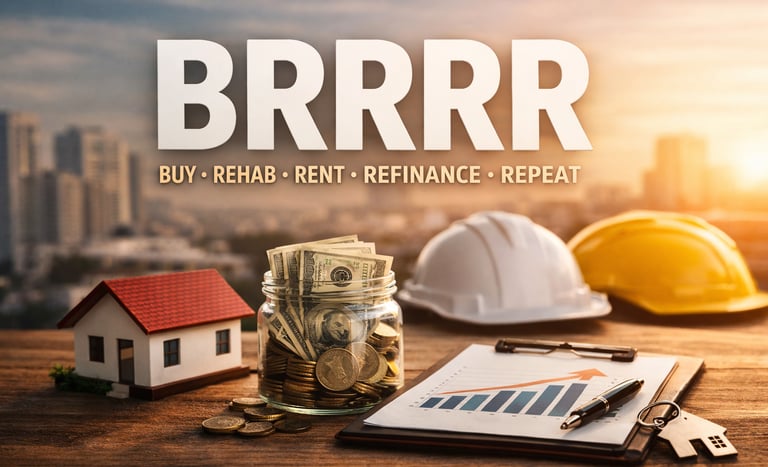
It’s the BRRRR strategy — Buy, Rehab, Rent, Refinance, Repeat — and it’s quickly becoming the go-to play for investors heading into 2026.
And honestly?
That shift makes a lot of sense.
First, Why BRRRR Is Having a Moment
For the last few years, a lot of investors lived off appreciation and fast flips. Buy it, paint it, list it, profit.
That game is harder now.
Homes aren’t flying off the shelf in 12 hours.
Buyer affordability is still tight.
Margins on flips are thinner and less predictable.
So investors are adjusting, and BRRRR fits the current environment better because it’s built around cash flow and long-term equity, not just a quick resale.
Instead of asking, “Can I sell this fast?”
They’re asking, “Can this property pay me while I hold it?”
That’s a much healthier question in 2026.
The Real Power of BRRRR: Forced Equity
Here’s the part most people miss.
BRRRR isn’t about waiting for the market to make you money.
It’s about creating value through the rehab.
You buy something that needs work.
You fix what actually matters — not just lipstick, but function and durability.
You rent it based on the improved condition.
Then you refinance based on the new value you created, not just what you paid.
If it’s done right, you’re not just recycling your cash…
you’re stacking long-term assets that can keep performing for years.
That’s why experienced investors love this model.
But Let’s Be Real — BRRRR Is Not “Easy Mode”
Social media loves to make this sound like:
“Just refinance and pull all your money out and boom, infinite houses.”
Yeah… about that.
BRRRR works, but it’s not automatic, and it’s definitely not passive in the beginning.
Real risks still exist:
Rehab costs going over budget
Appraisals coming in lower than expected
Rents not hitting projections
Lenders tightening guidelines
And here’s the big one…
If the deal only works if everything goes perfectly, it’s not a great BRRRR deal.
The smarter investors I talk to in 2026 are running more conservative numbers, leaving more equity in the property, and focusing on cash flow first, leverage second.
Less flashy.
Way more sustainable.
Why This Strategy Fits the 2026 Market So Well
Three big reasons:
1. Rental Demand Is Still Strong
Not everyone can buy right now, and not everyone wants to. Well-located rentals are still in demand in a lot of markets.
2. Appreciation Is No Longer the Only Plan
Investors are leaning back into fundamentals: income, operating costs, long-term holds.
3. Capital Efficiency Matters More Than Ever
Being able to reuse the same money instead of constantly injecting new cash keeps investors moving even when financing isn’t perfect.
In other words, BRRRR doesn’t depend on a “hot market.”
It depends on buying smart and managing well.
Big difference.
So… Is BRRRR Right for Everyone?
Short answer: no.
If someone hates managing projects, dealing with contractors, or handling rentals, this strategy will feel like a second job.
But for investors who are comfortable with:
Light to moderate renovations
Long-term holds
Building systems over time
BRRRR can be a powerful way to grow without constantly chasing the next flip.
It’s not about getting rich on one deal.
It’s about stacking good deals that keep paying you.
Final Thought
What I like about the shift toward BRRRR in 2026 is that it feels… smarter.
Less hype.
More fundamentals.
More focus on building something that lasts.
And in a market that’s still adjusting, that kind of mindset tends to win over time.
If you’re curious whether this strategy makes sense in your market, your budget, or your goals, that’s where the real conversation should start — because BRRRR isn’t a trend to copy, it’s a tool to use when it actually fits the numbers.
And yeah… the numbers always get the final vote.